Harry Potter Book Review: Harry Potter and The Philosopher's Stone BY J. K. Rowlings
- isiiube
- Jul 20, 2022
- 11 min read
Updated: Jul 24, 2022
Get The Book
Amazon Goodreads
Full of sympathetic characters, wildly imaginative situations, and countless exciting details, the first installment in the series assembles an unforgettable magical world and sets the stage for many high-stakes adventures to come.
it takes a great deal of bravery to stand up to our enemies, but just as much to stand up to our friends.Book Summary
Harry Potter has a horrible life. He is left with his callous relatives, who make him dwell in a cramped cupboard under the stairs, because his parents are deceased. But when he gets a letter telling him the truth about himself—that he's a wizard—his luck changes. He is saved from his family by an enigmatic visitor, who then transports him to Hogwarts School of Witchcraft and Wizardry, his new home.
Harry finally feels like a typical little child after spending his entire life hiding his magical abilities. But he is unique even in the Wizarding world. He is the boy who lived, the sole survivor of a fatal curse cast by the terrible Lord Voldemort, who brutally overthrew the wizarding world.

Despite being the finest year of Harry's life, his first year at Hogwarts wasn't without its flaws. Within the castle walls lurks a hazardous secret item, and Harry feels it is his duty to keep it from falling into the wrong hands. However, doing so would expose him to forces that are far more dangerous than he could have ever imagined.
The first book in the series creates an unforgettable magical world and lays the foundation for more high-stakes adventures to come. It is full of likable people, highly inventive scenarios, and endless interesting details.
The Philosopher's Stone is the first book in J.K. Rowling's seven-book Harry Potter series, which has sold more than 400 million copies worldwide and made her the most successful literary author of all time. Children and adults both read and appreciate the novels, and they have also been adapted into wildly successful movies.
Are the Harry Potter books as good as everyone says? When I first started reading The Philosopher's Stone, I was amazed at how witty and funny-as-hell the humor was. In order to laugh out loud the entire time, you normally need to read a Terry Pratchett book, but Rowling has succeeded in giving this book a charming wit and charm that will entertain and please both adults and children.

Review
Noonan from Australia This book is satisfyingly good, the entire idea of having a young boy who’s parents die in the hands in an blood thirsty super villain isn’t that unique... *cough* *cough* *Batman*. But she makes it so original with hoggwards and the mirror makes this book so good 9/10 (2021-11-30)
Athena-Jayde from New Zealand Best book of all time love the writing and the dream J.k Rowling is my all time favorite writer 10/10 (2021-08-24)
Anon from UK I never thought I'd enjoy Harry Potter so much! It's become my favourite series and absolutely LOVE the magic and everything about the book honestly. You can never get bored and all the chapters always leave you asking tons of questions! Love it! P.S. Joanne Rowling- I love your books. Keep on doing, what you're doing! You are such an amazing author and angel. 😃 10/10 (2021-07-26)
Samuel from Australia Could not tear my eyes away from this book. 9/10 (2021-06-21)
Haniya from Pakistan Harry Potter is the best English novel I read. 10/10 (2021-06-15)
Priyal from India We all know that the book is fab, but have you ever wondered , what if J.K. Rowling ended the book with the the last line saying- '' and then Harry woke up from the dream lying in the cupboard under the stairs....'' 10/10 (2021-05-25)
Anon from UK Great book for young and old, I have read it so many times i could say it word for word. I think that it is one of the best books that I have ever read. 9/10 (2021-01-30)
Anonymous from Rather not Say An interesting beginning for the award-winning series. This, unlike the other Harry Potters, wasn’t that good. Nearly each on got better. But some kids may find this book boring and lose interest. It just doesn’t have the action and sci-fi like the rest. Philosopher’s Stone: 6/10 Chamber of Secrets: 7/10 Prisoner of Azkaban: 9/10 Goblet of Fire: 9/10 Order of the Phoenix: 10/10 Half-Blood Prince: 6/10 Deathly Hallows: 9/10 Cursed Child: 2/10 Fantastic Beasts and Where To Find Them: 5/10 The Tales of Beedle the Bard: 4/10 6/10 (2020-12-28)
Beauty Queen from India It was very nice book. I am still reading it even after 100 times. It interesting you see I am a fast reader so I completed the book in 1 day. It tells about how Harry Potter a wizard and how his parents were murdered so he had only one relative his mom's sister Aunt Petunia and her family. Then a letter arrives at his house but his uncle won't let him see it but a giant named Hagrid the gamekeeper says the truth that he was an wizard like he studied in the school Hogwarts the magic school and made some friends too. But he needed to save the philosopher stone from the deadly wizard named Lord Voldemort but the problem was his least favorite teacher Snape who Harry thinks works for Voldemort but that isn't the end but I don't want to be a surprise spoiler so read it yourself I felt it was a good book. How about you? 10/10 (2020-11-30)
Anoymous from Somewhere Very good book. I had read it for more than 5 times. 10/10 (2020-11-30)
Anonymous from Somewhere It’s OK. There’s been better Harry Potters. But Artemis Fowl is more enjoyable. 7/10 (2020-11-25)
Praise for Harry Potter and The Philosopher's Stone
“Every phenomenon starts with a single spark, and for so many of us, the entryway into J.K. Rowling’s magical world came with Harry Potter and the Sorcerer’s Stone (or Philosopher’s Stone, depending on which side of the Atlantic you’re on). As Harry learned the ways of the wizarding world, readers followed him every step of the way. His first trip to Diagon Alley was also ours (ditto Hogwarts), and we discovered the thrills and dangers of that world right alongside him. It’s the most innocent book of the bunch, and has the lowest stakes, but who knew that at the time? That first Quidditch match was so exhilarating, the journey past the stone’s protections so suspenseful, and the first meeting with Lord Voldemort so intense — it all had me completely engrossed when I first read the book nearly two decades ago. But it was an even greater joy to later read it aloud to my youngest brother — with different voices for each character, because I commit to these things with Hermione-level intensity — and watch him become enchanted as well.
We didn’t know then what joys and tragedies would come over the next six books, but it’s amazing to think it all started with a little boy under a staircase, and a magical author who shared him with us. —JESSICA DERSCHOWITZ
About the Author
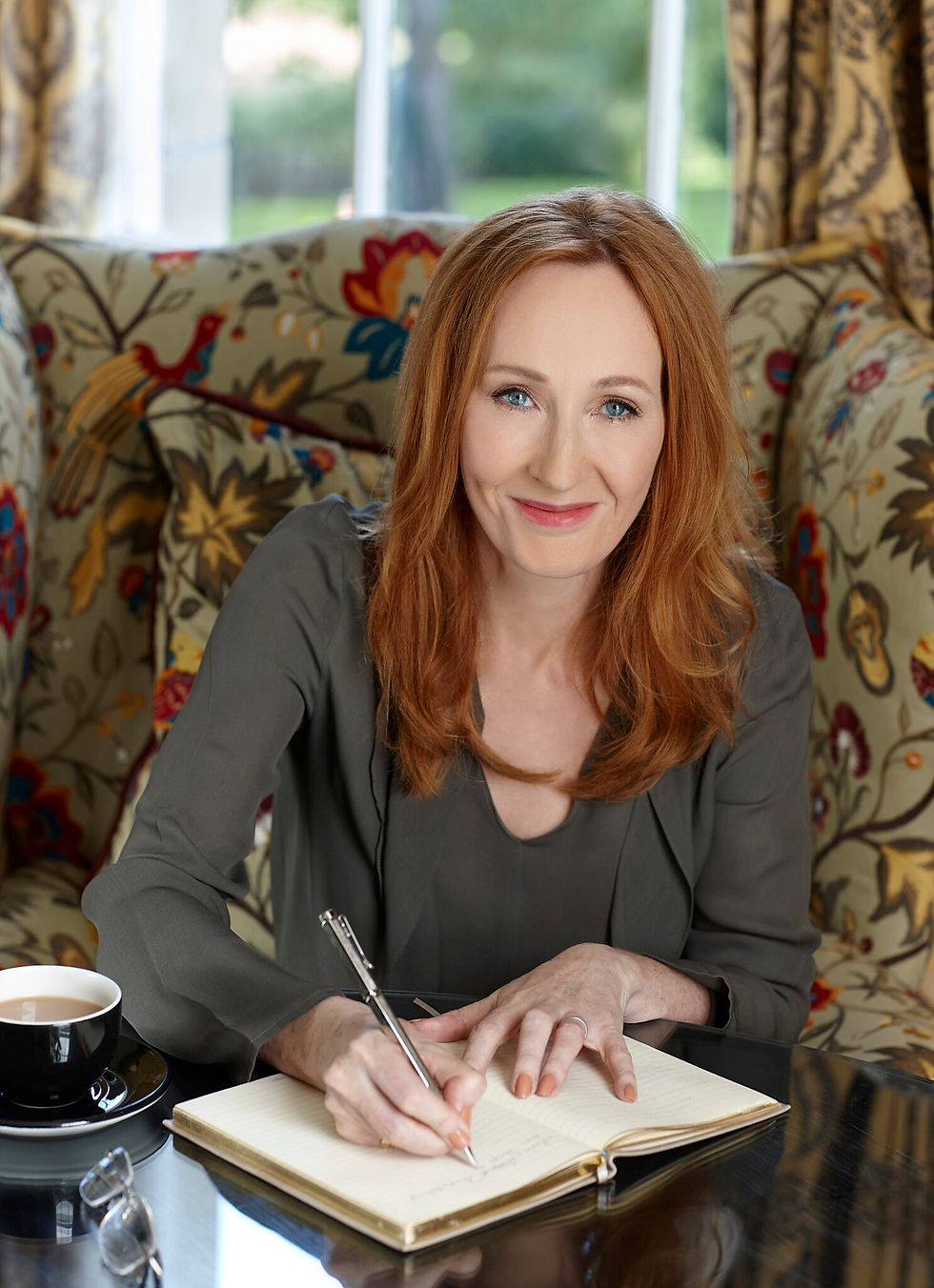
Joanne Rowling was born on 31st July 1965 at Yate General Hospital near Bristol, and grew up in Gloucestershire in England and in Chepstow, Gwent, in south-east Wales.
Her father, Peter, was an aircraft engineer at the Rolls Royce factory in Bristol and her mother, Anne, was a science technician in the Chemistry department at Wyedean Comprehensive, where Jo herself went to school. Anne was diagnosed with multiple sclerosis when Jo was a teenager and died in 1990, before the Harry Potter books were published. Jo also has a younger sister, Di.
The young Jo grew up surrounded by books. “I lived for books,’’ she has said. “I was your basic common-or-garden bookworm, complete with freckles and National Health spectacles.”
Jo wanted to be a writer from an early age. She wrote her first book at the age of six – a story about a rabbit, called ‘Rabbit’. At just eleven, she wrote her first novel – about seven cursed diamonds and the people who owned them.
Jo studied at Exeter University, where she read so widely outside her French and Classics syllabus that she clocked up a fine of £50 for overdue books at the University library. Her knowledge of Classics would one day come in handy for creating the spells in the Harry Potter series, some of which are based on Latin.
Her course included a year in Paris. “I lived in Paris for a year as a student,” Jo tweeted after the 2015 terrorist attacks there. “It’s one of my favourite places on earth.”
After her degree, she moved to London and worked in a series of jobs, including one as a researcher at Amnesty International. “There in my little office I read hastily scribbled letters smuggled out of totalitarian regimes by men and women who were risking imprisonment to inform the outside world of what was happening to them.” She said later. “My small participation in that process was one of the most humbling and inspiring experiences of my life.”


Jo conceived the idea of Harry Potter in 1990 while sitting on a delayed train from Manchester to London King’s Cross. Over the next five years, she began to map out all seven books of the series. She wrote mostly in longhand and gradually built up a mass of notes, many of which were scribbled on odd scraps of paper.
Taking her notes with her, she moved to northern Portugal to teach English as a foreign language, married Jorge Arantes in 1992 and had a daughter, Jessica, in 1993. When the marriage ended later that year, she returned to the UK to live in Edinburgh, with Jessica and a suitcase containing the first three chapters of Harry Potter and the Philosopher’s Stone.
In Edinburgh, Jo trained as a teacher and began teaching in the city’s schools, but she continued to write in every spare moment.
Having completed the full manuscript, she sent
Get Books
the first three chapters to a number of literary agents, one of whom wrote back asking to see the rest of it. She says it was “the best letter I had ever received in my life.”
The book was first published by Bloomsbury Children’s Books in June 1997, under the name J.K. Rowling.
The “K” stands for Kathleen, her paternal grandmother’s name. It was added at her publisher’s request, who thought a book by an obviously female author might not appeal to the target audience of young boys.
The book was published in the US by Scholastic under a different title (again at the publisher’s request), Harry Potter and the Sorcerer’s Stone, in 1998. Six further titles followed in the Harry Potter series, each achieving record-breaking success.
In 2001, the film adaptation of the first book was released by Warner Bros., and was followed by six more book adaptations, concluding with the release of the eighth film, Harry Potter and the Deathly Hallows Part 2, in 2011.
J.K. Rowling has also written two small companion volumes, which appear as the titles of Harry’s school books within the novels. Fantastic Beasts and Where to Find Them and Quidditch Through the Ages were published in March 2001 in aid of Comic Relief. In December 2008, a third companion volume, The Tales of Beedle the Bard was published in aid of her international children’s charity, Lumos.
In 2012, J.K. Rowling’s digital company Pottermore was launched, which became Wizarding World Digital in 2019. Pottermore Publishing continues to be the global digital publisher of Harry Potter, Fantastic Beasts and the Wizarding World.
Also in 2012, J.K. Rowling published her first novel for adults, The Casual Vacancy (Little, Brown), which has now been translated into 44 languages and was adapted for TV by the BBC in 2015.
Under the pseudonym Robert Galbraith, J.K. Rowling also writes crime novels, featuring private detective Cormoran Strike. The first five novels: The Cuckoo’s Calling (2013), The Silkworm (2014), Career of Evil (2015), Lethal White (2018) and Troubled Blood (2020) all topped the national and international bestseller lists and have been adapted for television by the BBC and HBO. The sixth book in the series, Ink Black Heart is to be published later this year.
J.K. Rowling’s 2008 Harvard commencement speech was published in 2015 as an illustrated book, Very Good Lives: The Fringe Benefits of Failure and the Importance of Imagination (Sphere), and sold in aid of Lumos and university-wide financial aid at Harvard.
In 2016, J.K. Rowling collaborated with playwright Jack Thorne and director John Tiffany on an original new story for the stage. Harry Potter and the Cursed Child Parts One and Two opened in London and is now playing in the USA and Australia.. The script book was published (Little, Brown) to mark the play’s opening in July 2016, and instantly topped the bestseller lists.
Also in 2016, J.K. Rowling made her screenwriting debut with the film Fantastic Beasts and Where to Find Them, a further extension of the Wizarding World, which was released to critical acclaim in November 2016. This was the first in a series of new adventures featuring Magizoologist Newt Scamander and set before the time of Harry Potter. The second film, Fantastic Beasts: The Crimes of Grindelwald, was released in 2018 and the third, Fantastic Beasts: The Secrets of Dumbledore is to be released in April 2022.
The screenplays were published (Little, Brown) to coincide with each film release: Fantastic Beasts and Where to Find Them The Original Screenplay (2016) and Fantastic Beasts: The Crimes of Grindelwald The Original Screenplay (2018).
In March 2020, J.K. Rowling and Wizarding World partners launched the Harry Potter At Home initiative to entertain children stuck at home during the Covid-19 pandemic with the first Harry Potter book read aloud by celebrities on video, and made available for free through audiobook and ebook streaming.
In May 2020, J.K. Rowling’s fairy tale for younger children, The Ickabog, was serialised for free online for children during the Covid-19 pandemic in the summer of 2020, and is now published as a book illustrated by children, with her royalties going to charities supporting vulnerable groups affected by the pandemic.
Her latest children’s novel The Christmas Pig, a standalone adventure story about a boy’s love for his most treasured thing and how far he will go to find it, is out now.
J.K. Rowling has been married to Dr Neil Murray since 2001. They live in Edinburgh with their son, David (born 2003) and daughter, Mackenzie (born 2005).
Honours & Awards
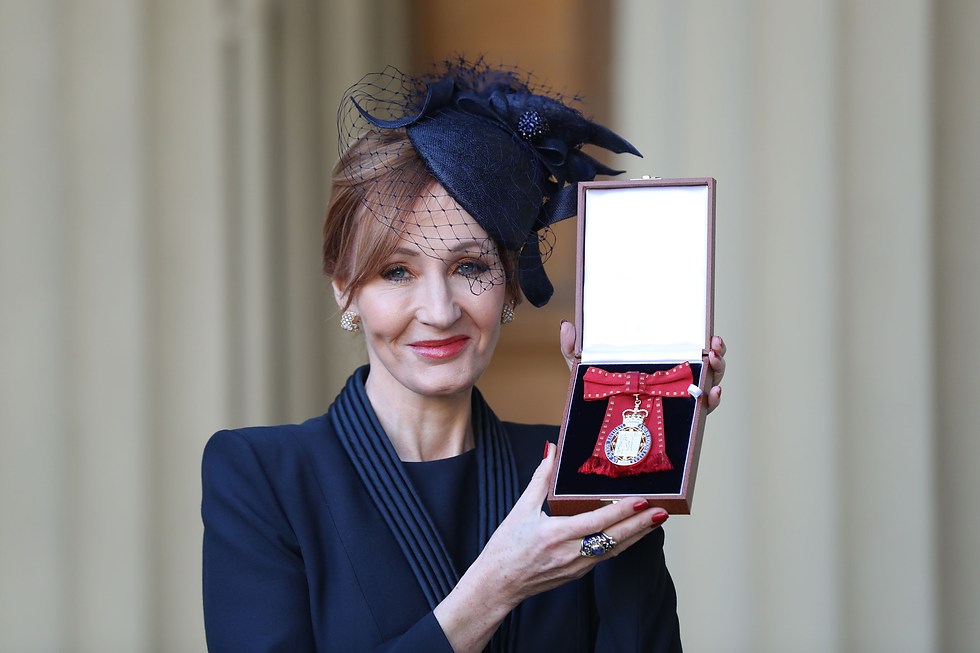
J.K. Rowling has received many honours and awards, including:
Companion of Honour, for services to literature and philanthropy, 2017 PEN America Literary Service Award, 2016 Freedom of the City of London, 2012 Hans Christian Andersen Award, Denmark, 2010 Chevalier de la Legion d’Honneur: France, 2009 Lifetime Achievement Award, British Book Awards, 2008 South Bank Show Award for Outstanding Achievement, 2008 James Joyce Award, University College Dublin, 2008 The Edinburgh Award, 2008 Commencement Day Speaker, Harvard University, USA, 2008 Blue Peter Gold Badge, 2007 WH Smith Fiction Award, 2004 Prince of Asturias Award for Concord, Spain, 2003 Order of the British Empire (OBE), 2001 Children’s Book of the Year, British Book Awards, 1998 and 1999 Booksellers Association Author of the Year, 1998 and 1999
Books Updates Reviews
I started reading this novel when i was still in high school, like I've watched the movie, but reading it is more better than watching it, it explains it more and it more understandable.
JK Rowling certainly knows how to write a good book! This wasn't my favorite book in the series, but it wasn't because it was bad. Even though it wasn't as intense as the others, I enjoyed the plot and conflict. I was definitely taken aback at the end...it was so epic and mind-blowing!
When you loved the first book in a series and start reading the second, eager for the story to continue, there's always the fear that things won't be as good as the first. Chamber of Secrets will convince you otherwise: everything is improving.
"Have you ever heard of a plan that could go so wrong?"
I was relieved to see that everything I adored about the first book was still applicable to the second. It would be a bit redundant to list all of the benefits here, but I can't help but emphasize how simple it is to read the novel. In no way am I indicating that the narration is simplistic or too simple - far from it - but it is just one fluid flow. The plot itself is far more thorough than the first, owing to the original's setting up of the scene and characters. Though I didn't think so at the time, the first book now feels like an introduction to the series, with this being the first genuine adventure.
In conclusion, this epic and fantastic book HARRY POTTER AND THE PHILOSOPHER'S STONE , has a thrilling effect on the reader. Rating 4 out of 5.
FAQs
Is the character Hermione Granger based on anyone?
Yes. She is based on Harry Potter creator J.K Rowling herself, during her teen years.
Is "Harry Potter and the Sorcerer's Stone" based on a book?
The movie is based on Harry Potter and the Philosopher's Stone (1997), the first book of the Harry Potter series written by British author J.K. Rowling. The title was changed to Harry Potter and the Sorcerer's Stone by US publishers and released over a year later than in the UK. The movie was followed by Harry Potter and the Chamber of Secrets (2002), Harry Potter and the Prisoner of Azkaban (2004), Harry Potter and the Goblet of Fire (2005), Harry Potter and the Order of the Phoenix (2007), Harry Potter and the Half-Blood Prince (2009), Harry Potter and the Deathly Hallows: Part 1 (2010), and Harry Potter and the Deathly Hallows: Part 2 (2011). Rowling's Harry Potter and the Philosopher's Stone was adapted for the screen by American screenwriter Steve Kloves.
What are the main differences between the book and the movie?
The movie covers most of the book. Some scenes from the book are compressed or placed somewhere else in the story, but there are some notable omissions, listed below in the order that they appear in the book:

The book has a different opening, which introduces Vernon and Petunia Dursley before Harry is put on their doorstep. Vernon has some strange encounters on the streets with weirdly dressed people who are in the midst of celebrating the downfall of "you-know-who". He also finds out that he has a nephew called Harry, the son of his wife's estranged sister.

Harry's early years are mentioned in more detail, especially the endless taunts from Dudley, and the dull times he had when the Dursleys dumped him with Mrs. Figg, the next-door neighbour. Harry sometimes even seems to remember vaguely how he got his scar. After Harry receives letters from Hogwarts directed at his cupboard, his uncle and aunt move him to "Dudley's second bedroom" in a futile effort to stop the letters. The entire family even moves to a hotel to avoid the letters, but they find their way even there.

Hagrid mentions he isn't allowed to do magic since he got expelled from Hogwarts in his third year, but he refuses to elaborate. In Diagon Alley, Harry has an early meeting with Draco Malfoy while he is buying robes, but Draco does not properly introduce himself until the train voyage to Hogwarts. Harry needs to wait out the beginning of the school year at the Dursleys'; Uncle Vernon takes him to the train station in London, but only because Dudley needs surgery there in order to have his pig's tail removed. Ginny Weasley is already introduced at the station in the movie, but not in the book. During the train ride, Harry immediately notices Malfoy's disdain for Ron and his family (Malfoy even tries to steal candy from Ron, but Ron's rat Scabbers intervenes), and declines his friendship. In the film Harry instead first met Malfoy at Hogwarts before the Sorting.

Apart from the other house spirits, there is another particularly nasty poltergeist called Peeves, who gets his pleasure from pulling all sorts of pranks with the students and Mr Filch. Peeves' only fear is for the Bloody Baron, though he makes a point to be on somewhat good behavior around Professor Dumbledore (Harry later uses this information to his advantage when he is under the Invisibility Cloak and pretends to be the Bloody Baron who turned himself invisible). The book also contains an additional teacher, Professor Binns, who is a ghost (he once fell asleep next to a burning fire) and gives excessively dull lessons in History of Magic. Snape's disdain for Harry is illustrated in more detail, as he manages to blame Harry for everything, punish him for every petty little thing, and deducts points from Gryffindor at almost any opportunity.

Neville is also a more prominent figure in the books as he usually accompanies Ron and Harry; in the movie, Hermione is actually used in place of Neville in some cases. After their first flying lesson, Draco Malfoy challenges Harry to a wizarding duel at midnight, which Harry and Ron accept. They sneak out that night but find that Malfoy tricked them in an attempt to get them in trouble. On their way back, they run into Neville. The three get redirected to Gryffindor Tower and end up going into the third floor corridor which is guarded by Fluffy (in the movie, it is a suddenly changing staircase that leads them there). Dismayed that his plan to rat out Harry has failed, Draco tries again by alerting the teachers that Harry has received a flying broom, something first-years aren't allowed to have; to his chagrin, he finds out all teachers have suspended the rule since Harry is now a Seeker.

When Harry asks Professor Dumbledore what he sees when he looks into the Mirror, Dumbledore answers that he sees himself holding some socks, objects he very much likes to receive, but people always give him books instead (Harry doubts whether Dumbledore is really truthful here).

A scene from the book was filmed but deleted from the movie: Harry finds a collector's card explaining that Dumbledore is famous for having defeated the notorious wizard Grindelwald, and his work on alchemy together with Nicholas Flamel, which prompts Hermione to find a book on Alchemy, and deduce that the secret object guarded by Fluffy is the Philosopher's Stone. The book features another Quidditch match, Gryffindor against Hufflepuff; as Snape is the referee, he predictably favours the latter team, but Harry wins the game by catching the Snitch five minutes into the game.

The subplot of Norbert the Dragon is more detailed. As breeding dragons is illegal and Draco has been spying around, Harry and Hermione convince Hagrid to let Norbert go off to Romania to live with others of his species. They use the Invisibility Cloak to carry Norbert to the Astronomy tower where some friends of Ron's brother Charlie (who works in Romania as a Dragon Keeper) picks him up during a transport. Malfoy tries to rat them out again, but as they are invisible and he is outside his dorm during curfew hours, he receives detention. In the excitement, Harry and Hermione forget the Cloak and are discovered; Neville is also caught when he wants to warn them. This leads to a major point deduction for Griffindor house and all three having to go with Hagrid to the Forbidden Forrest as punishment, along with Draco. In the movie, Ron gets punished in Neville's place, because in the book, Ron was in the Hospital Wing due to a dragon bite and since the Norbert subplot was greatly shortened in the film to where the three were caught by McGonagall after hours after they left Hagrid's Hut since Draco ratted them out (though Draco was also punished since he was also out of his dormitory after hours to his surprise).

While in the forest, Harry starts out with Hagrid and Hermione, while Hagrid has his dog Fang look after Draco and Neville, and they meet several more centaurs, who seem to have an uneasy relationship with humans. When Draco starts pestering Neville again, Hagrid teams Draco up with Harry. In the film however, Harry is paired with Draco and Fang in the beginning, while Ron and Hermione are paired with Hagrid.

When Harry, Ron and Hermione are going after the stone, there are two more rooms after the Chess Room; one contains a Troll that has luckily been knocked out already; the other contains a Potion Riddle designed by Snape, comprised of 7 potions, and the door to the next room is blocked by magical fire. Hermione easily deduces which two potions must be drunk to pass through the fire, but opts to let Harry go and stay behind herself to care for the injured Ron. Due to this omission Hermione remains with the injured Ron in the Chess Room.

While in the hospital, Dumbledore agrees to answer Harry's questions, but he refuses to tell Harry just yet why Voldemort wants him dead; only that the sacrifice made by Harry's mother gives him strong protection against Dark Magic. He also admits that he gave Harry the Invisibility Cloak, which was given to him by Harry's father for safekeeping. Dumbledore also mentions that Harry's father once saved Snape's life, which Snape still resents and may be the reason why he hates Harry.
Everyone passes their exams for next year, with Hermione, naturally, on top of her class. Harry receives a notice stating he is not allowed to use magic outside school, but he chooses not to tell the Dursleys, so he can keep Dudley off his back for a change.
Where is Hogwarts supposed to be located?
According to author J.K. Rowling, Hogwarts School of Wizardry and Witchcraft is located in Scotland (see An interview with J.K. Rowling (2000) by L. Fraser, pp 20-21.). Scotland as the location for Hogwarts might also be surmised from the amount of time it takes to get there going directly north from platform 9¾ at Kings Cross station, London (over six hours), and also by the mention in Fantastic Beasts and Where to Find Them of an Acromantula colony in Scotland. The school is not noticed by local Muggles because of the magical protections surrounding it. For the movie, however, various locations in England were used for scenes that took place at Hogwarts.

My best book of all time